← Back to Home

About Clone King

A cloner built for growers who read the bad reviews first

Our Story

Cut a mint stem at 8 p.m., drop it through a neoprene collar, and your pump runs all night, with no rooting gel, no humidity dome, and no tray to babysit. You check the cut ends at day three. Most soft-stem varieties hand you transplant-ready roots by day 10-14.

Clone King buyers arrive skeptical, and reasonably so: the stem-rot reports and the promise of perfect rooting sit on the same page. Thread a mint cutting through the collar and it hangs in open air above a sealed reservoir, bare stem exposed from the first minute. A spray manifold soaks those stem bases around the clock, so no soil, no rooting gel, and no humidity dome enters the loop. What the copy leaves out is where results split: hold your tub at 66°F and soft-stem cuttings show root bumps in 3-5 days. Let the same tub drift past 75°F and that batch of mint stalls or turns to mush inside ten days.

A university biology department ran Coast Redwood, Ficus benjamina, Kava Kava, and tomato cuttings through the 25-site machine and rooted most of them, while coffee and hibiscus refused. Seat a basil or tomato stem and you pull roots inside a week; press in hardwood rose stock and you can wait a month for nothing.

The design traces to a January 2013 sales record under the manufacturer of record, Harrigan's Hydroponics and Supply. Check the number that matters before you order: 2,821 verified buyers rate it 4.5 stars.

Growers keep the tub for the same reason they buy it: the method does not change as the site count goes up. Move from an entry tub to the flagship and you change pump flow and lid width, not the technique you already learned. The spare misters in your drawer press into the new lid without a trip to the store.
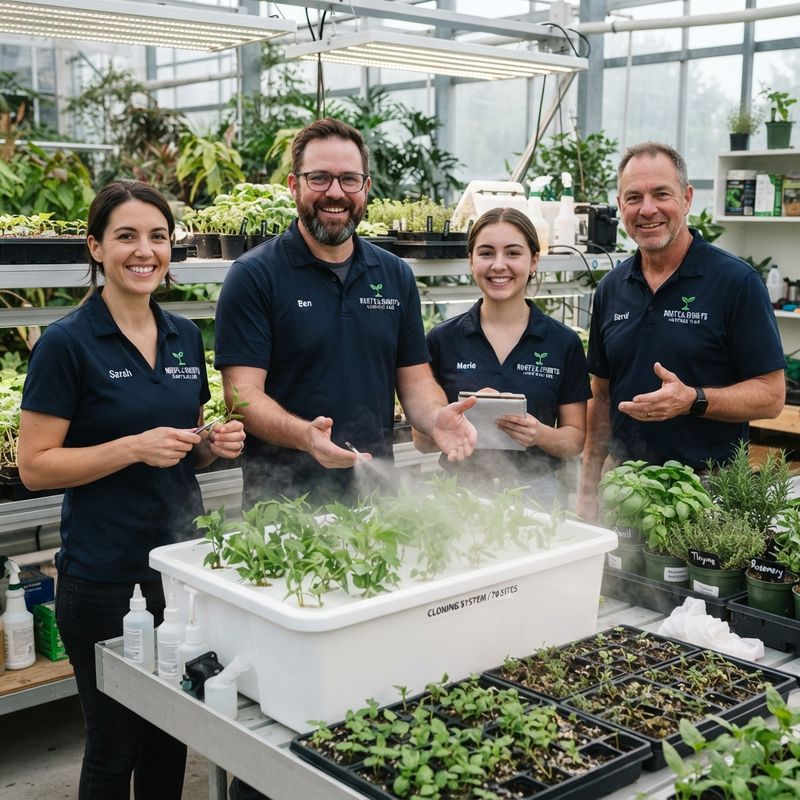
Clone King propagation bench with rooted cuttings ready for transplant

Our Mission & Values

The principles behind a reservoir-and-manifold design that Clone King has not redrawn since January 2013.

01

Mechanism Over Hype

Thirteen spray heads run against bare stem bases every minute the pump stays plugged in, and nothing in the tub dries between cycles. The part the category copy skips: you set the reservoir temperature yourself, and a tub left to drift past 75°F loses the batch a cool one saves.

02

Plant-Agnostic by Design

Seat a pencil-thick tomato stem or a mint tip in the same collar and the manifold treats both the same. Soft-stem cuttings crack roots first; hardwood rose stock can sit in that tub for weeks.

03

Aeroponic Rooting Without the Premium Tier

Fill a spare-room bench with cuttings from an entry tub and the mist hits those stems overnight exactly as it does inside a premium branded cloner. From entry tier to flagship the rooting method is identical; step up and you change site count and pump flow, 317 GPH to 496 GPH.

04

A Design With a Paper Trail

The same reservoir-and-manifold layout has been on record since January 2013. Thirteen years of buyers logged 4.5 stars across 2,821 verified reviews on it, which is more history than most cloning machines can show.

The record, in numbers

  • 4.5★Weighted average across 2,821 verified reviews
  • 3-5 daysRoot bumps on most soft-stem cuttings
  • 317-496 GPHSubmersible pump flow, entry tier to flagship
  • Since 2013Sales record on the same reservoir design

Pick the tier that matches your bench

Twenty-five collars fill in one afternoon if you are cutting a whole herb bed. Compare the tubs before you take a single stem.

Browse every site-count tier